
When Good Preparation Isn’t Enough: The National Library of South Africa and ISBN Allocation Drama
How a seemingly simple ISBN request became a lesson in bureaucratic overreach and the challenges facing modern self-publishers
Yesterday should have been a milestone moment. I was supposed to announce to my newsletter readers that my novel The Seventh Kill was available for pre-order on Amazon Kindle. Instead, I’m writing about a bureaucratic maze that has derailed my planned publication schedule and marketing strategy.
The Problem: One Book, Two Formats, One ISBN
Like many self-publishers, I planned to release The Seventh Kill in both ebook and paperback formats simultaneously. This is standard practice in modern publishing—it allows authors to maximize their reach and accommodate different reader preferences. Ideally I also would have like to release an audio version and possibly even a hardcover but these are too far out of reach of my current budget.
To do this properly, I needed two ISBN numbers: one for the ebook and one for the paperback.
In South Africa, ISBN numbers are administered by the National Library of South Africa (NLSA) and provided free of charge to local authors and publishers. It seemed straightforward enough. I submitted my application well in advance, requesting ISBNs for both formats, confident that my preparation would ensure a smooth launch.
The NLSA had other plans.
The Response: Administrative Confusion
Instead of the two ISBNs I requested, the NLSA issued only one—for the paperback. No explanation was provided for why the ebook version was excluded from the allocation. When I queried this decision, the response was both puzzling and concerning:
“We are now assigning 1 ISBN and once you have complied with the legal deposit requirements for the said book you may request another ISBN.”
This response revealed a fundamental misunderstanding of how modern publishing works and, more troublingly, an apparent confusion of two distinct legal obligations.
The Legal Framework: Two Separate Functions
Here’s where things get complicated—and legally questionable. The NLSA administers two separate functions that are governed by completely different frameworks:
- ISBN allocation: Based on international agreements and standards for book identification as governed by the International ISBN Agency and the ISO 2108 Standard
- Legal deposit requirements: Governed by South Africa’s Legal Deposit Act No. 54 of 1997
These are distinct responsibilities that happen to be administered by the same organization. Critically, the Legal Deposit Act is clear about the sequence of events: publishers must submit copies after publication, not before. Section 4 specifically states that documents must be dispatched “within 14 days of the day on which the document is published.”
The NLSA’s current approach—withholding ISBN allocation until legal deposit compliance—effectively turns the legal framework on its head.
The Modern Publishing Reality
The NLSA’s approach also ignores how contemporary publishing actually works, particularly for print-on-demand titles. Here’s the typical workflow:
- Author prepares both ebook and print versions simultaneously
- Both formats are uploaded to distribution platforms like Amazon
- The ebook becomes immediately available for purchase
- Print copies are only produced when specifically ordered
- A Legal deposit copy can be ordered and submitted post-publication
By restricting ISBN allocation, the NLSA is forcing authors into an artificial publication sequence that doesn’t align with industry standards, legal requirements, or practical publication processes.
Just a note here also about the difference between Proof and Author copies when publishing on Amazon. Before a POD paperback is published on Amazon the only print copy that can be ordered is a Proof copy that feature a “Not for Resale” watermark and unique barcode with no ISBN.
Only once a book has been published on the Amazon system can an Author copy be ordered that would reflect the correct ISBN number.
The Broader Implications
This isn’t just about one author’s frustration with bureaucracy. The NLSA’s approach has several concerning implications:
Impact on Publication Schedules
Without ISBNs for both formats, authors cannot proceed with coordinated launches across multiple platforms. This disrupts marketing plans, pre-order strategies, and professional publishing workflows.
Market Disadvantage
South African authors already face challenges competing in global markets. Don’t get me started on that. I have a very long list I work hard to ignore on most days. Adding administrative hurdles that don’t exist in other jurisdictions puts local authors at a further disadvantage.
Legal Overreach
Disclaimer: I am not a lawyer or legal expert and this does not consitute legal opinion or advice.
Perhaps most seriously, the NLSA appears to be operating outside its statutory authority.The Legal Deposit Act’s Section 10, which outlines remedies for non-compliance, nowhere authorizes the withholding of ISBN numbers as a compliance mechanism.
Stifling Innovation
Modern publishing is increasingly agile and responsive to market demands. Bureaucratic constraints that force authors into Kafkaesque workflows stifle innovation and entrepreneurship in the publishing sector.
The Questions That Remain Unanswered
Despite an initial attempt at clarification, several key questions remain unaddressed:
- What is the legal basis for limiting ISBN allocation to a single format?
- How does this practice align with the Legal Deposit Act’s clear post-publication requirements?
- How are print-on-demand workflows supposed to function under these constraints?
- What constitutes the mysterious “re-assignment” of ISBNs mentioned in correspondence?
A Call for Common Sense
The NLSA’s role should be to facilitate South African publishing, not to create barriers that constrain how authors bring their work to market. ISBN allocation and legal deposit compliance are separate functions for good reason—they operate at different stages of the publishing process and serve different purposes.
Publishers should be able to obtain ISBNs for all intended formats before publication, allowing for professional, coordinated launches. Legal deposit requirements can and should be fulfilled post-publication, as the Act clearly intends.
The Path Forward
This situation highlights the need for the NLSA to:
- Clarify its ISBN allocation policies and ensure they align with international standards
- Separate ISBN administration from legal deposit enforcement
- Update its procedures to accommodate modern publishing workflows
- Provide common sense responses to print-on-demand submissions
For fellow self-publishers, this serves as a reminder that even the best preparation can be derailed by administrative confusion. It’s worth understanding your rights under the Legal Deposit Act and pushing back when institutional practices don’t align with legal requirements.
I say this with a hopeful heart that this is true, that asking the right questions will clarify the situation and resolve the issues.
Conclusion: More Than Just Numbers
What started as a simple request for ISBN numbers has revealed deeper issues about how South African institutions support—or constrain—local publishing. ISBN numbers might seem like mere administrative details, but they’re the foundation of professional publishing. When their allocation becomes entangled with unrelated compliance mechanisms, it doesn’t just delay individual books—it undermines the entire ecosystem that supports South African literature.
The Seventh Kill will eventually see the light of day, with proper ISBNs for both formats. But this experience serves as a cautionary tale about bureaucratic overreach and the importance of clear, legally sound administrative practices.
Until then, I wait—not because the law requires it, but because an institution has confused its own authority with its obligations.
Have you experienced similar challenges with ISBN allocation or legal deposit requirements? Share your story in the comments below.
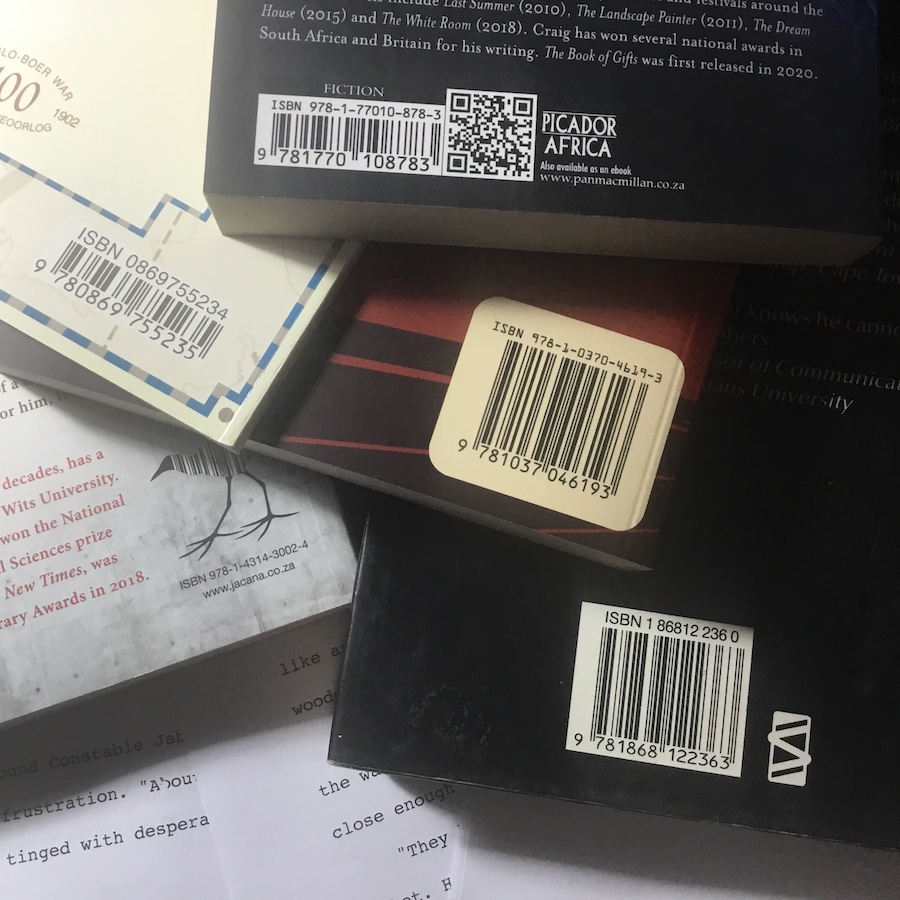
Books featured in the Blog header image:
- The Book of Gifts by Craig Higginson – ISBN: 978-1-77010-878-3
- Uyadela Wen’osulapho: Black Participation in the Anglo-Boer War by Bill Nasson – ISBN: 0869755234
- Night Light Tales by I.M. Gerhi – ISBN: 978-1-0370-4619-3
- The Afrikaners: Their Last Trek by Graham Leach – ISBN: 1-86812-236-0
- Predator Politics: Mabuza, Fred Daniel and the Great Land Scam by Rehana Rossouw – ISBN: 978-1-4314-3002-4
Amazon links above are affiliate links that might earn me a small commission but add no cost to the user.